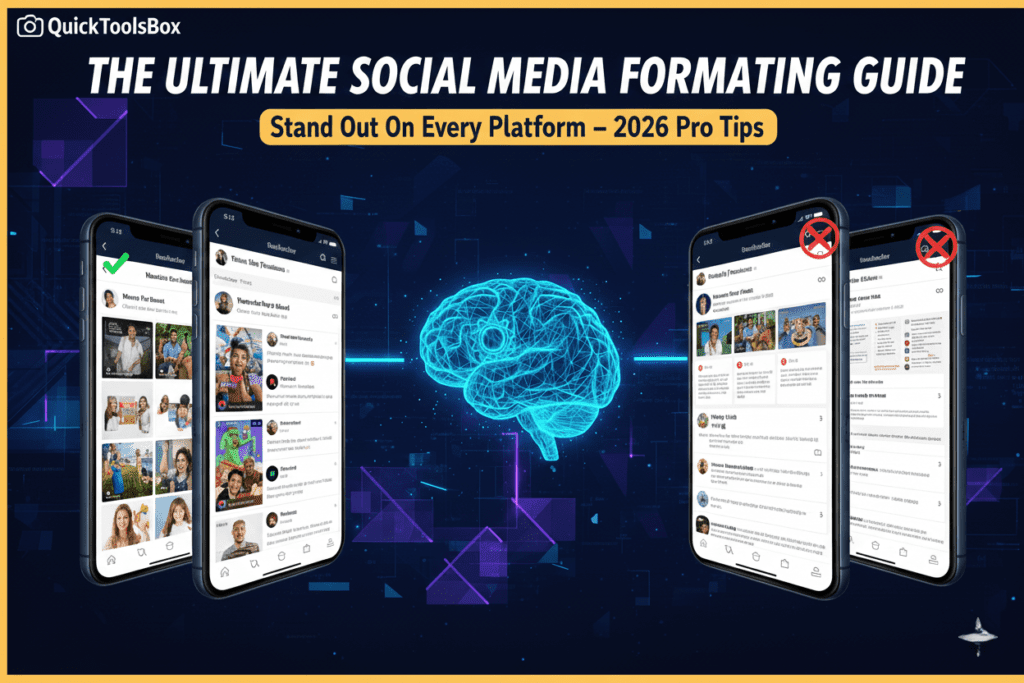
The Ultimate Social Media Formatting Guide: Stand Out on Every Platform
In the digital age of 2026, simply posting content isn’t enough. Every day, millions of posts are uploaded to the cloud, but only a fraction get the engagement they deserve. Why? Because most creators overlook the power of presentation. This is where The Ultimate Social Media Formatting Guide comes into play. If your text is cluttered, your images are blurry, or your links are broken, users will scroll past you in a heartbeat.
I remember my first viral attempt on LinkedIn. I had a great story, but I posted it as one giant “wall of text.” It got zero likes. A week later, I reposted the same content but used white space, bullet points, and proper bolding. The result? Over 500 shares and dozens of new leads. This personal experience proved that The Ultimate Social Media Formatting Guide isn’t just about aesthetics; it’s about how the human brain processes information in a fast-scrolling environment.
Why Social Media Formatting Matters for Growth
Formatting is the bridge between your ideas and your audience’s attention. When you follow a structured Ultimate Social Media Formatting Guide, you are essentially making it “easy” for the reader to consume your value. Proper formatting improves readability scores, which social media algorithms (like those on Instagram, X, and LinkedIn) use to determine if your content is worth showing to more people.
According to research by HubSpot, content with relevant imagery and clean layout receives 94% more views than plain, unformatted text. This is why top-tier digital marketers spend as much time on formatting as they do on the actual writing.
Inside The Ultimate Social Media Formatting Guide
- The Psychology of “The Scroll”: Why White Space is King
- Platform-Specific Formatting Rules (LinkedIn, X, Instagram)
- Visual Optimization: Aspect Ratios and Image Quality
- Technical Hacks: Using Entity Converters and Resizers
- Platform Comparison Table
- Frequently Asked Questions
Platform-Specific Strategies in The Ultimate Social Media Formatting Guide
Not all platforms are created equal. What works on a professional network like LinkedIn will likely fail on a visual-centric platform like Instagram. Here is how to master the Ultimate Social Media Formatting Guide for each major site:
1. LinkedIn: The Professional Polish
On LinkedIn, authority is everything. Use “Sentence Case” for your storytelling and “Title Case” for your hooks. Avoid long paragraphs. A good rule of thumb is no more than two sentences per paragraph. This creates “breathing room” for the reader.
2. X (Twitter): The Power of Brevity
With limited characters, every space counts. Use threads to break down complex topics. Interestingly, using HTML Entity Converter tools can sometimes help you find unique symbols that bypass standard text limitations, making your tweets visually distinct.
3. Instagram & Facebook: Visual Narrative
Here, the caption is secondary to the image, but still vital. Use emojis as bullet points to add color and personality. Most importantly, ensure your images aren’t cropped awkwardly by using a Free Image Resizer to hit those 1080×1080 or 1080×1350 specs perfectly.
Social Media Platform Formatting Comparison
To help you navigate The Ultimate Social Media Formatting Guide, I’ve compiled this quick reference table for 2026 standards.
| Platform | Ideal Text Case | Best Image Ratio | Primary “Hook” Location |
|---|---|---|---|
| Sentence Case | 1200 x 627 (Link) | First 3 lines | |
| Sentence/Emoji mix | 4:5 (Vertical) | Image Text overlay | |
| X (Twitter) | Concise/Lower case | 16:9 (Landscape) | First Tweet in thread |
| Sentence Case | 1:1 (Square) | Headline above image |
Technical Tools to Enhance Your Formatting
A major secret within The Ultimate Social Media Formatting Guide is the use of automation tools. You shouldn’t be doing everything manually. For example, when posting code snippets or special symbols, an HTML Entity Converter ensures your text doesn’t break or display “weird” characters on different mobile devices.
Furthermore, image distortion is a brand-killer. If you upload a horizontal photo to Instagram Stories, it will look stretched. Always run your assets through a Free Image Resizer to ensure they look sharp. Professionalism is found in the details, and these tools make those details effortless.
For more technical documentation on how web standards affect content display, you can visit the World Wide Web Consortium (W3C).
Common Mistakes to Avoid
- ALL CAPS: It feels like shouting. Unless it’s a one-word headline, avoid it.
- Broken Links: Always test your links before publishing. A broken link signals a “Low Value” post to the algorithm.
- Ignoring Accessibility: Use Alt-Text for images. It helps visually impaired users and gives you a slight SEO boost.
- Inconsistent Branding: Using different fonts and colors on every post confuses your audience.
Frequently Asked Questions (AEO Optimized)
What is the most important part of The Ultimate Social Media Formatting Guide?
The “Hook.” The first 2-3 lines of your text or the first 1 second of your video determine if the user will stop scrolling. Formatting these to be bold and clear is essential.
Does formatting affect social media SEO?
Absolutely. Platforms like Instagram and TikTok now use keywords in captions to categorize content. Proper formatting (headings/lists) helps their AI understand your post better.
Should I use hashtags in the middle of a sentence?
No. According to The Ultimate Social Media Formatting Guide, hashtags should be placed at the end or in the first comment to keep the reading experience clean.
Conclusion
Mastering The Ultimate Social Media Formatting Guide is a game-changer for anyone looking to build a digital presence. By treating your posts like mini-articles—complete with headlines, white space, and optimized visuals—you elevate your brand above the noise. Consistency is key, so find a style that fits your brand and stick to it.
Ready to level up? Start by optimizing your next post using our Free Image Resizer and see the difference in your engagement metrics!

Leave a Reply